Services
Integrations and APIs
Accounting, ERP, CRM, e-shop, warehouse, banks, couriers, government platforms: we connect them so that data is entered once and flows wherever it is needed.
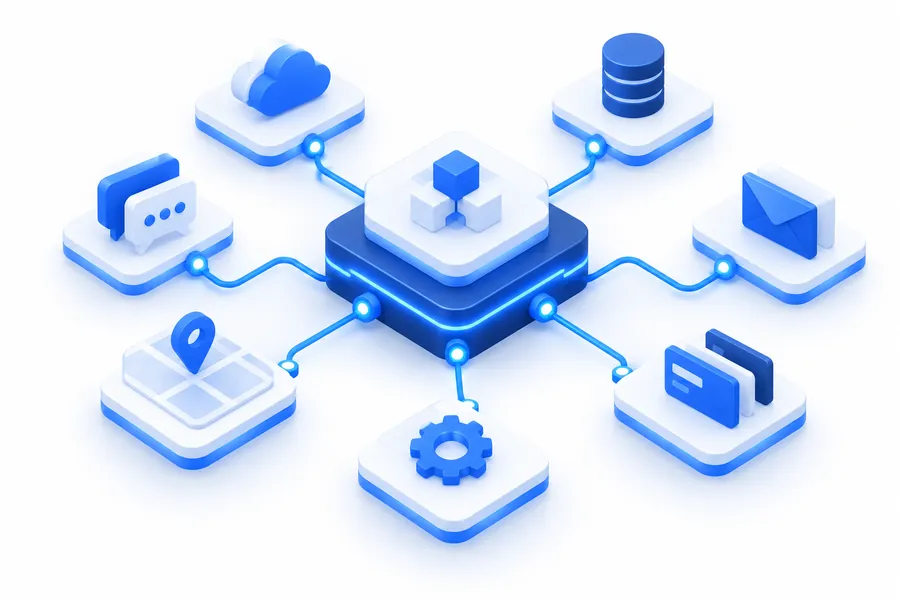
Islands of data
Most companies use several good systems that do not talk to each other. People become the integration: exporting, copying, re-typing and checking.
Every manual hand-off costs time and creates errors. An integration replaces it with a reliable, monitored connection.
What we build
System-to-system integrations
Two-way synchronisation between accounting, ERP, CRM, e-commerce and warehouse systems.
Public and private APIs
Well-documented APIs that let partners and your own apps work with your data securely.
E-invoicing and government platforms
Connections to national e-invoicing and reporting systems, such as e-Factura in Romania and Moldova.
Payments and banking
Payment gateways, bank statement import and automatic reconciliation.
Notifications
SMS, email, WhatsApp, Telegram and Viber messages triggered by events in your systems.
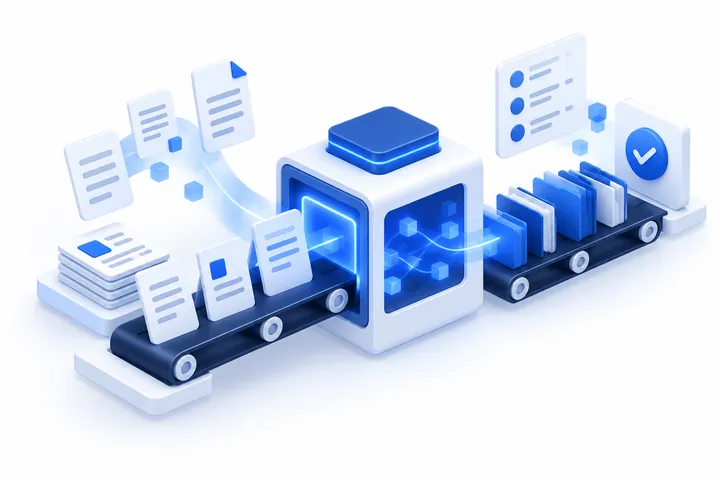
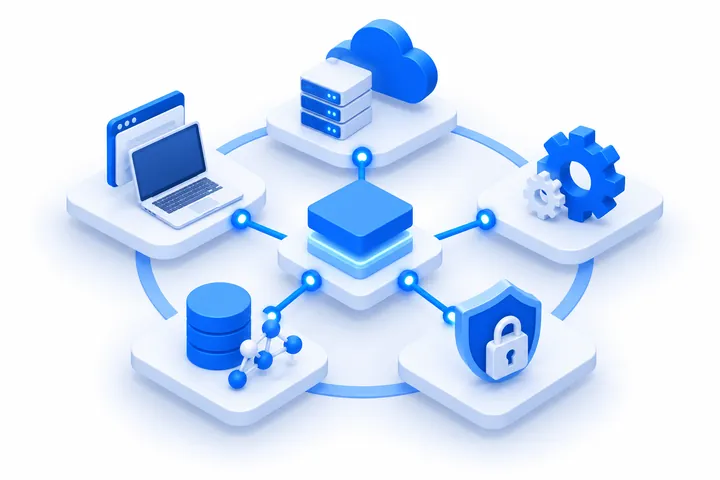
How it fits together
Connects to
- Accounting and ERP
- E-shop and CRM
- Banks and couriers
Integration layer
Used by
- Synchronised systems
- Partner access
- Alerts and logs
Typical features
Reliability
- Automatic retries and error queues
- Monitoring and alerts when a connection fails
- Idempotent processing, so nothing is entered twice
Security
- API keys and OAuth 2.0
- Encrypted traffic
- Access limited to the data each partner needs
Transparency
- Log of every message exchanged
- Dashboard with sync status
- Clear API documentation (OpenAPI)
Typical scenario
An illustrative example of the kind of project we build, not a description of a specific client.
Situation
An online shop receives orders on its website, but stock is kept in the warehouse system and invoices in accounting. Staff copy every order by hand.
What we build
An integration that sends each order to the warehouse, updates stock on the website, creates the invoice in accounting and sends tracking details to the customer.
Result
Orders processed without retyping, stock always correct online, and customers informed automatically.
How the project runs
Inventory of systems
Which systems, which data, in which direction, how often.
Technical check
What each system allows: API, files, database access, limits.
Mapping and rules
Field by field mapping and rules for conflicts and errors, agreed with your team.
Build and test
Integration built and tested with real data in a test environment.
Go live and monitor
Gradual switch-over with monitoring and alerts from day one.
What you receive
- Working, monitored integrations
- API documentation
- Error handling and alerting
- Source code and the rights to it
- Runbook for your team
Technologies we use
- REST and SOAP
- Webhooks
- OAuth 2.0
- Message queues
- OpenAPI documentation
- Node.js and Python
Questions about this service
What if a system has no API?
There is usually another way: file exchange, a database connection or an export schedule. We find the most reliable option.
What happens when one system is down?
Messages wait in a queue and are processed when it comes back. You get an alert, and nothing is lost.
Can you connect to e-Factura?
Yes. We build connections to national e-invoicing systems, including validation, submission and reading the responses.
Who maintains integrations when systems update?
We can, under a support plan. APIs change over time, and monitoring helps catch it early.
Related services
All services

Let's talk about your project
Describe what you need in a few lines. We reply within one business day with questions and next steps.
Request a quote